Property management answering service

Know which property call needs you before you call back.

Selena answers when a property manager, leasing team, or owner cannot. It asks what the caller needs, gathers the useful details, and texts a concise summary when the call ends.

Choose Selena when you need repeatable intake for resident, leasing, and vendor calls. Use a staffed dispatch service when a person must assess emergencies, contact on-call teams, or confirm that help is underway.

100 calls and texts free. No credit card required.

One phone number serves four very different jobs.

A property line can bring a current resident, a prospective tenant, a contractor, or an owner. Useful coverage identifies the caller’s job first, then gathers only the details the manager needs next.

Resident maintenance

Capture the condition, location, and timing.

A message that only says “maintenance problem” creates another round of phone tag. Selena can ask for the unit, what is happening, when it began, and what the resident has already done.

  • Property and unit or area
  • Visible symptoms in the caller’s own words
  • When the issue started and whether it is changing
  • The callback number and requested response time
Leasing inquiry

Keep a prospect from disappearing into voicemail.

A prospective resident can explain which property, unit type, move date, and showing window they have in mind. The manager gets a compact lead summary instead of an empty missed-call notification.

  • Property or neighborhood of interest
  • Desired move date and unit type
  • Preferred showing or callback time
  • Questions that need a manager’s answer
Vendor and contractor

Preserve the update without interrupting a showing.

Vendors can leave the property, work order, access problem, part delay, or completion update. Selena’s summary helps the manager decide whether to respond now or include the update in the next work block.

  • Company and caller name
  • Property, unit, or work order
  • Work completed, blocked, or rescheduled
  • The decision or access the vendor needs
Owner and applicant

Route the substance, not just the phone number.

An owner may want a leasing update while an applicant needs help with the next step. Selena can identify the relationship and collect a clear request, while leaving account decisions and policy explanations with the manager.

  • Caller’s relationship to the property
  • Property, application, or lease context
  • The answer or action being requested
  • Any deadline named by the caller

A better message is a smaller next decision.

Property managers do not need a longer transcript. They need enough context to choose the next action without replaying a voicemail or starting the intake again.

  • Identify the call type. Separate resident requests, leasing leads, vendor updates, and owner questions.
  • Ask consistent follow-ups. Gather the location, condition, timing, and requested response.
  • Send the short version. Text the substance of the call as soon as the conversation ends.
  • Keep judgment with the manager. Selena captures facts; it does not promise repairs, interpret leases, or decide emergencies.

Write the summary your on-call person can act on.

The call script should follow the decisions your team actually makes. Start with one frequent call type and define the five facts that prevent a second intake call.

The caller says

“The heat in our unit stopped working.”

A bare voicemail leaves open questions: which property, which unit, when it stopped, what the thermostat shows, whether the whole unit is affected, and how quickly the resident expects a response.

The manager receives
Illustrative summary: Oak Street Apartments, Unit 12. Heat stopped overnight; thermostat reads 58°F and is set to 70°F. No unusual smell or noise reported. Resident is home until 10:30 a.m. and requests a callback.

This does not diagnose the equipment or declare the call safe. It gives the manager a clearer starting point for the property’s own response process.

AI intake, staffed dispatch, and voicemail solve different problems.

The best property management answering service depends on what must happen before the call can end. Compare authority and handoff, not just whether someone answers.

What to compareSelenaStaffed property answering serviceVoicemail
Who answersAn AI phone assistantA live agent following the provider’s script and escalation rulesA recorded prompt
Best useRepeatable intake and immediate manager summariesHuman conversation, dispatch, escalation, and confirmed receipt when contractedLow-cost message recording when no live exchange is needed
Follow-up questionsCan ask for the property, unit, condition, timing, and next stepCan question, clarify, and follow account-specific proceduresDepends on what the caller remembers to include
After the callConcise text summary when the call endsProvider-specific message delivery, transfer, or dispatch workflowAn audio recording the manager must retrieve and replay
Emergency roleNo emergency dispatch or safety judgmentMay offer on-call escalation and emergency dispatch under a defined planNo active escalation
Price model100 combined lifetime calls and texts free, then a flat $20 per month for unlimited useVaries by provider; often minutes, calls, agents, or custom service scopeOften included with the phone plan
When a staffed service is the better fit

Choose trained human coverage when your process requires a person to classify emergencies, call an on-call roster until someone confirms receipt, de-escalate distressed residents, interpret policy, or make commitments on the property’s behalf. Leading pages in this search category emphasize those staffed dispatch capabilities; Selena does not claim them.

Category references checked August 5, 2026: MAP Communications property management service, AnswerPro property management service, and Absent Answer property management service. These links show how staffed providers describe dispatch and escalation; they do not verify Selena’s performance.

Start with one call type, not the whole portfolio.

A narrow first workflow is easier to test and improve. Choose the call your team replays most often, then make the required handoff explicit.

01 · Define

Pick the first call type

Choose maintenance requests, leasing inquiries, or vendor updates. Write the facts your team needs before it can act.

02 · Route

Use the dedicated number

Publish Selena’s number directly or forward selected calls from your existing carrier when you cannot answer.

03 · Review

Check the first ten summaries

Look for missing property, unit, timing, condition, and callback details. Keep high-stakes exceptions outside the AI workflow.

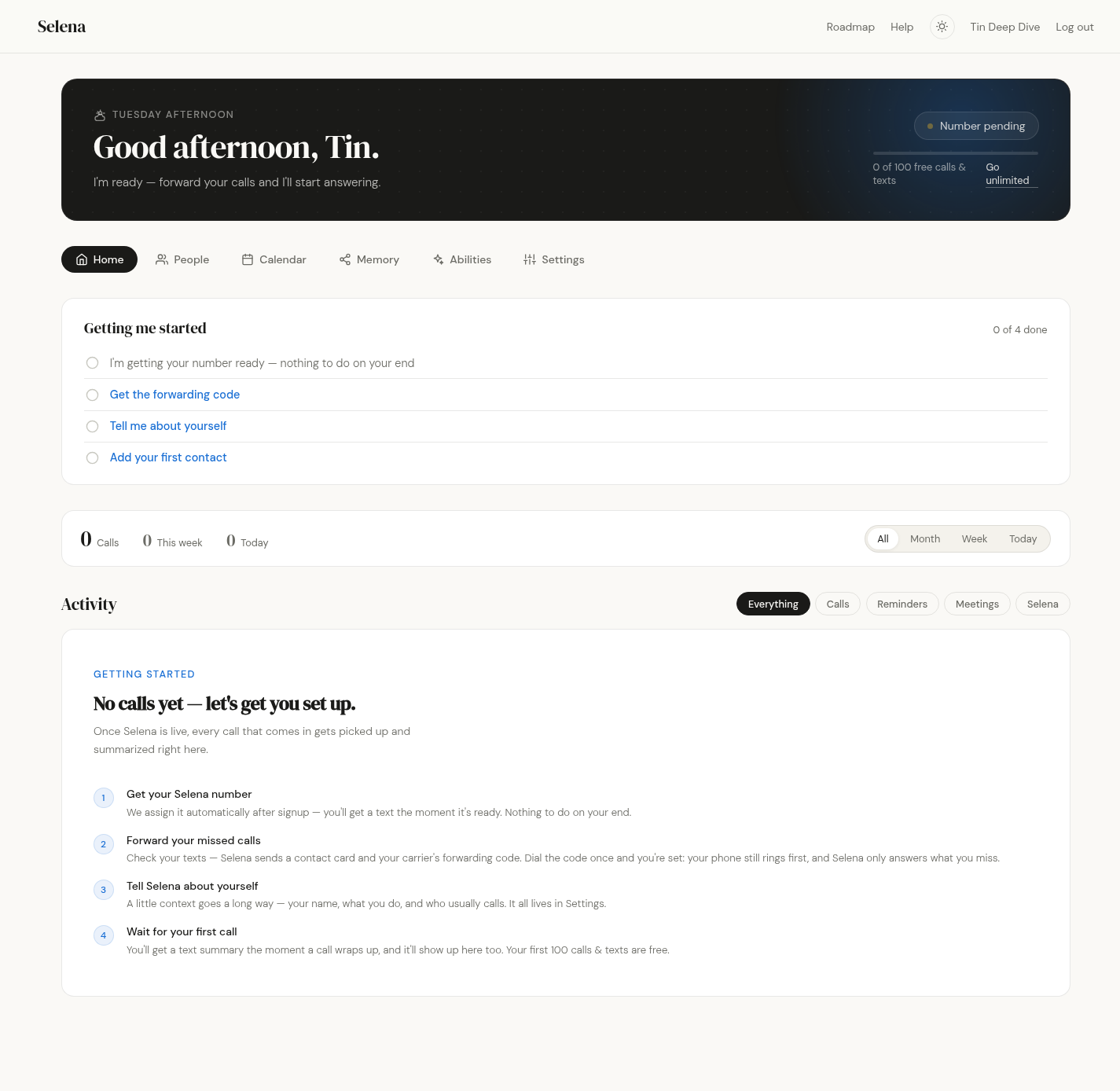
What a fresh Selena account looks like before the first call.

This is the actual signed-in Selena dashboard, not an illustrative vendor portal. It shows dedicated-number setup, call forwarding, the first-contact step, the call count, and where activity appears after setup.

Fresh Selena dashboard showing dedicated-number setup, call forwarding, call count, and the activity area where call summaries appear.
Actual Selena dashboard captured from a fresh free account. External calling, messaging, Google Calendar, and paid features were not activated for this capture.

The practical questions before you route a line.

What does a property management answering service do?

A property management answering service picks up when the manager or leasing team cannot, gathers the reason for the call, and passes the details to the right person. Selena provides an AI-first version focused on call intake and immediate text summaries.

Can Selena dispatch emergency maintenance?

No. Selena can gather the caller’s description and send the owner a summary, but it is not an emergency dispatch center. Properties that need guaranteed on-call escalation, safety triage, or confirmed receipt should use a staffed service built for that responsibility.

Can Selena answer calls to an existing property management number?

Selena provides a dedicated number. A property manager can publish that number directly or use carrier call forwarding to send selected calls from an existing line to Selena.

How much does Selena cost for property managers?

The Starter allowance includes 100 combined lifetime answered calls and owner-sent texts. Pro is a flat $20 per month for unlimited use.

Go deeper on after-hours calls, service models, and price.

Turn the next property call into a useful handoff.

Start with 100 calls and texts free. Keep Pro at a flat $20 per month for unlimited use if the summaries fit your workflow.

Request access